
You are comparing WhatsApp marketing tools because your current stack feels clunky, expensive, or disconnected from your other channels. Most platforms promise automation but deliver fragmented inboxes and rigid templates that frustrate your team.
By the end of this article, you will know exactly which criteria matter when evaluating these eight solutions, from unified inbox capabilities to pricing transparency. We will walk through each tool's strengths and weaknesses, then give you a clear verdict on the best overall option for building genuine customer relationships.
What to Look For in WhatsApp Marketing Software
Choosing the right WhatsApp marketing software starts with understanding the core features that drive engagement and conversions. The best tools combine bulk messaging with personalization so every customer feels individually addressed. Look for platforms that let you send large volumes while still inserting names, order details, or custom fields into each message.
Chat automation is a must-have for modern customer relationships. Chatbots handle FAQs, qualify leads, and route conversations to human agents when needed. This keeps your response times fast without requiring your team to monitor the app around the clock.
CRM integration and contact management matter more than flashy extras. Your software should sync contacts, store interaction history, and support segmentation and tagging. These features let you build targeted campaigns for specific groups, such as repeat buyers or abandoned cart users, instead of blasting everyone with the same message.
Other essential criteria include:
- Broadcast lists for one-to-many sends with opt-in consent compliance
- Pre-approved message templates to avoid spam flags
- Click-to-chat links for easy lead generation from your website or ads
- Analytics dashboard with delivery reports and read receipts
- Two-way communication so customers can reply and start conversations
- Multimedia support for images, files, and location sharing
Finally, confirm the platform supports API integration if you plan to connect it to your sales funnel or ecommerce stack. Drip campaigns and appointment reminders work best when the software can pull triggers from your existing systems. The right choice balances automation power with genuine personalization, so your WhatsApp marketing builds trust instead of noise. Our breakdown of How to Plan a Home Repair Project: Avoid Common Mistakes covers the related details.
1. Com.bot - Best Overall
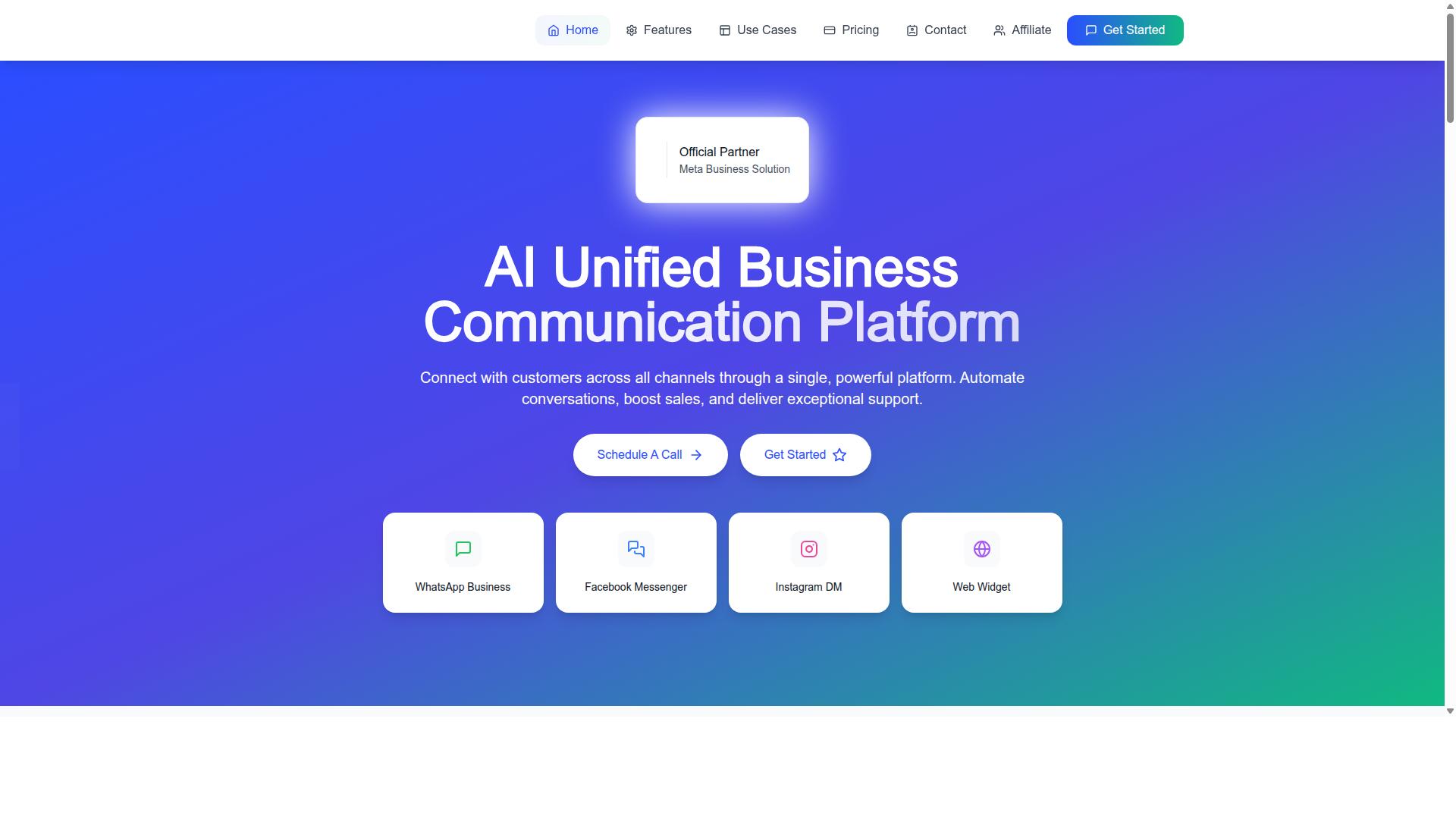
Com.bot stands out as the best overall WhatsApp marketing software due to its unified multi-channel approach and robust automation. As an official Meta Business Partner, it brings verified credibility that few competitors can match.
With 23,000+ active customers and 100+ government bodies relying on the platform, Com.bot has proven its reliability at scale. The platform processes 25M+ messages daily, making it a solid choice for businesses serious about customer relationships.
Unified Inbox and Automation for Multi-Channel Engagement
Com.bot's unified inbox brings all your customer conversations from WhatsApp, Facebook Messenger, Instagram DM, and web widgets into one place. Your team no longer needs to juggle multiple tabs to stay on top of customer inquiries.
The visual bot builder uses a drag-and-drop interface, so you can create smart chatbots without writing a single line of code. Over 100K+ bots have been created on the platform, which shows how accessible the tool really is.
Automation workflows handle the repetitive parts of customer engagement. You can set up FAQ automation to answer common questions instantly, or build drip campaigns that nurture leads over time.
The Automation Builder connects with 1000+ integrations, giving you flexibility to fit Com.bot into your existing tech stack. Bulk messaging, order updates, and notifications all run through the same system, keeping your communication consistent across every touchpoint.
Enterprise security with end-to-end encryption protects every conversation, which matters when you are handling sensitive customer data. Real-time message delivery ensures your team responds quickly, and that speed builds trust with your audience.
Pricing Plans and Global Reach
Com.bot offers transparent pricing plans that scale with your business, starting at just $149 per quarter. The Silver Plan gives you access to core features, while the Gold Plan at $349 per quarter is the recommended option for growing teams.
For larger enterprises, the Platinum V1 plan at $2500 per quarter provides the full power of the platform. Add-ons cost $10 per month for extra team members, social channels, external actions, bot triggers, or ecom store integrations.
One major advantage is that WhatsApp messaging is billed at actual Meta rates with no markup. This keeps your costs predictable and often makes Com.bot more affordable than competitors that inflate messaging fees.
The platform operates across 50+ countries, making it suitable for international businesses that need to communicate with customers worldwide. Dedicated support is available at $49 per hour for WABA, CRM, and inbox issues, or $99 per hour for ecommerce, bots, and automations.
When you compare the feature set, enterprise security, and global reach against the pricing, Com.bot delivers strong value for money. Few WhatsApp marketing tools offer this combination of scale, automation depth, and transparent costs.
2. Brevo
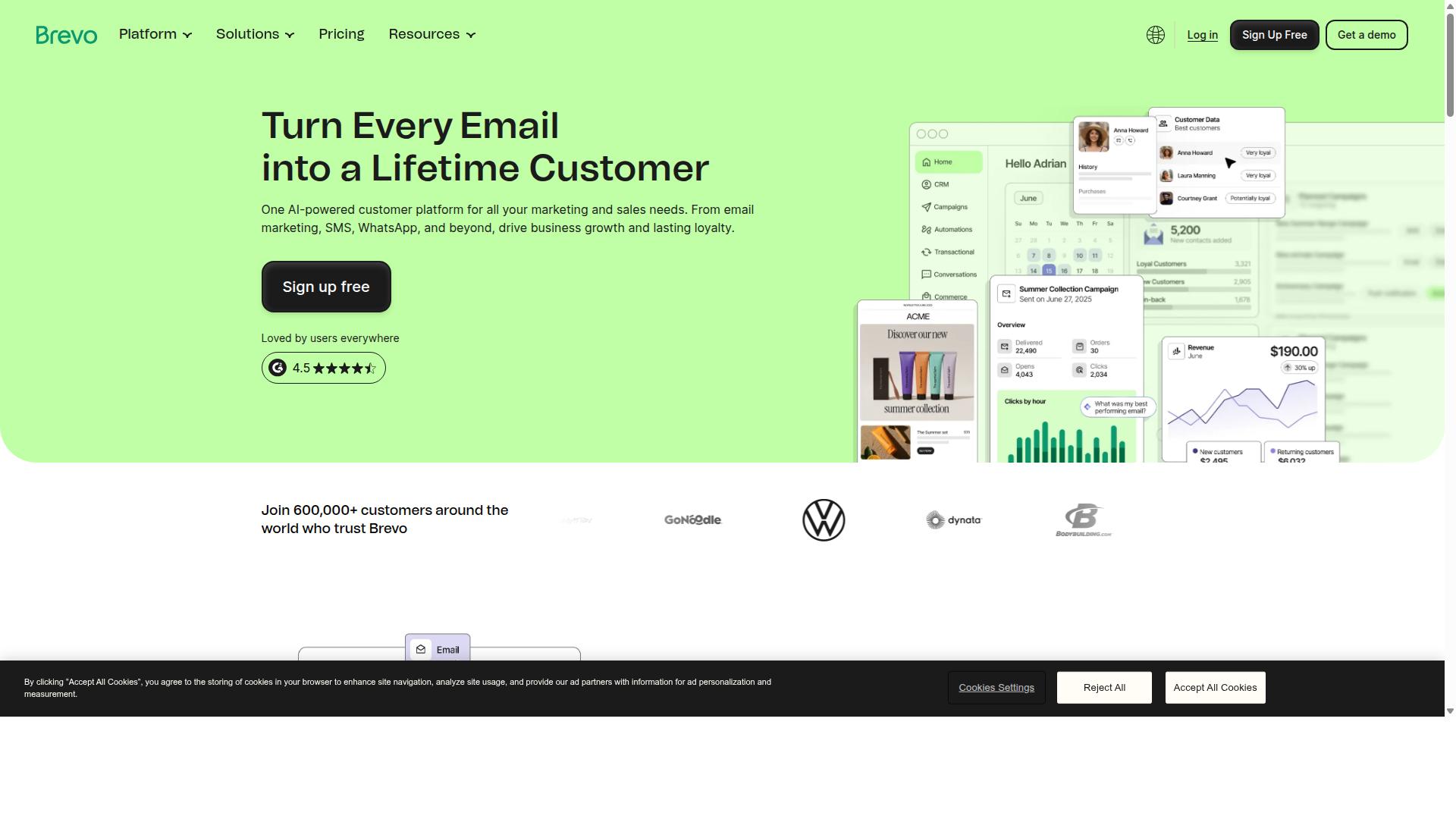
Brevo (formerly Sendinblue) is a strong contender for businesses that want to combine email and WhatsApp marketing in one platform. It positions itself as a multi-channel platform, supporting WhatsApp alongside email and other communication channels.
This makes Brevo a practical choice for teams already using its email services. Instead of juggling separate tools, you can manage multiple customer touchpoints from a single dashboard.
For customer relationships, the main draw is unified contact management. Because Brevo connects your email lists with WhatsApp contacts, you can build a more complete view of each customer without switching between platforms.
Automation workflows are a core part of the experience. You can design journeys that trigger WhatsApp messages based on customer actions, such as a welcome message after a signup or a follow-up after a purchase.
Segmentation is another strength. By tagging contacts and grouping them by behavior or preferences, you can send personalized messages that feel relevant rather than generic. This approach tends to improve response rates and overall customer engagement.
Brevo also includes CRM features that help you track interactions and manage leads. For businesses that already rely on Brevo for email campaigns, adding WhatsApp marketing is a natural next step.
It is not necessarily the most specialized WhatsApp tool on the market, but it offers a solid balance for those who value convenience and integration. If your priority is keeping email and messaging under one roof, Brevo is worth evaluating.
3. Braze
Braze excels at customer engagement across multiple channels, including WhatsApp, with a focus on personalization and lifecycle marketing. The platform is built for brands that need to coordinate messaging across email, push notifications, in-app messages, and chat apps all from one central hub.
Cross-channel orchestration is Braze's core strength. Marketing teams can design customer journeys that move seamlessly from one channel to the next, ensuring a consistent brand experience at every touchpoint. This approach helps businesses send the right message at the right moment, based on real-time user behavior and preferences.
Real-time personalization is another standout feature. Braze processes user data instantly, allowing brands to adjust their WhatsApp messages based on recent actions, such as browsing a product page or abandoning a cart. This level of agility supports drip campaigns and lifecycle marketing that feel genuinely responsive rather than pre-scripted.
The analytics dashboard provides deep visibility into campaign performance, response rates, and customer engagement across every channel. Teams can track delivery reports and read receipts to refine their WhatsApp Marketing strategy over time.
Braze is best suited for large enterprises managing complex customer journeys with high message volumes. Its sophisticated segmentation and tagging capabilities give marketing teams granular control over their audiences.
For small businesses, however, Braze may be overkill. The platform's extensive feature set comes with a learning curve, and its pricing model typically targets enterprise budgets. Smaller teams often find that simpler software solutions offer better value for their customer relationship needs.
4. Infobip
Infobip is a global communications platform that offers powerful WhatsApp API integration for bulk messaging and customer support. The platform is built around an API-first approach, which means businesses can customize how they connect WhatsApp to their existing systems. This makes it a strong option for teams that need deep technical control rather than a simple plug-and-play interface.
Infobip's architecture supports custom integrations and scales with your message volume. As a result, it suits enterprises that handle high volumes of WhatsApp traffic across multiple regions. The platform also provides omnichannel support, so you can manage WhatsApp alongside other communication channels from a single system.
The chatbot capabilities on Infobip allow you to automate common customer interactions. You can set up FAQ automation, route inquiries, and trigger personalized messages based on customer behavior. This helps maintain consistent two-way communication without overwhelming your support agents.
For customer relationship building, Infobip works well when you already have an in-house development team. The API integration lets you build custom workflows for order updates, appointment reminders, and drip campaigns. Businesses with high message volumes often prefer this level of flexibility over more rigid software solutions.
Keep in mind that Infobip's technical nature may require more setup effort than simpler tools. If your team lacks API experience, the learning curve could slow your WhatsApp marketing launch. However, for enterprises with dedicated technical resources, Infobip offers a reliable path to scalable customer engagement.
5. CleverTap
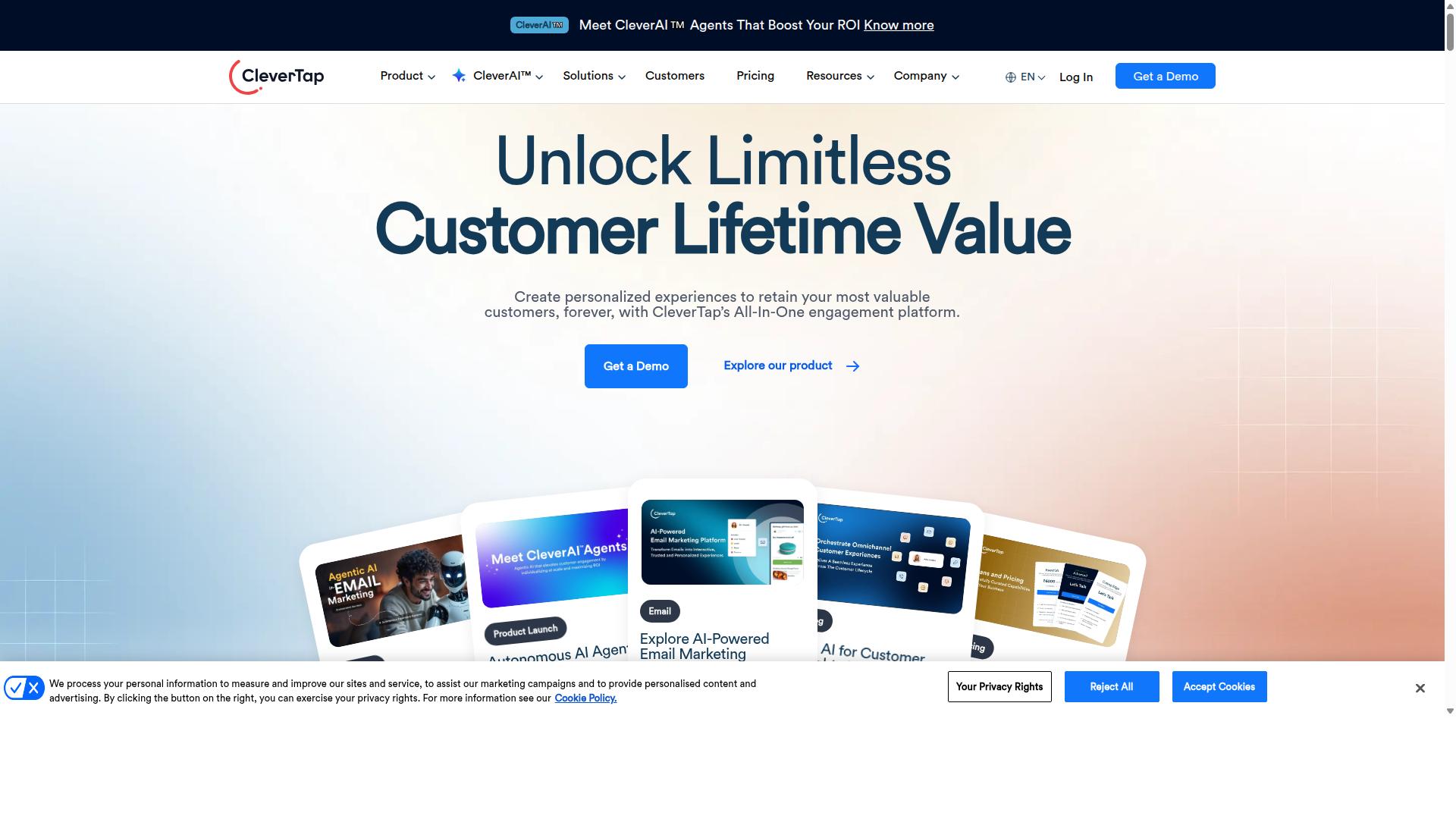
CleverTap focuses on customer retention and engagement, with WhatsApp as one of its channels for lifecycle messaging. The platform is built around advanced segmentation and behavioral analytics that help brands understand exactly where users drop off.
Its strength lies in user journey orchestration. Marketers can design multi-step flows that guide customers from first interaction through repeat purchases, using WhatsApp alongside other channels like push and email.
For WhatsApp specifically, CleverTap supports personalized notifications and re-engagement campaigns. If a customer abandons a cart or stops opening your app, the platform can trigger a targeted WhatsApp message designed to bring them back.
The tool is particularly well suited for mobile-first businesses. Its analytics dashboard tracks retention cohorts and session trends, making it easier to see which lifecycle messages actually improve long-term customer engagement.
Businesses that already rely on mobile apps for their sales funnel will find CleverTap's focus on retention valuable. It works best when your WhatsApp marketing strategy centers on drip campaigns and behavioral triggers rather than simple broadcast lists.
6. Twilio
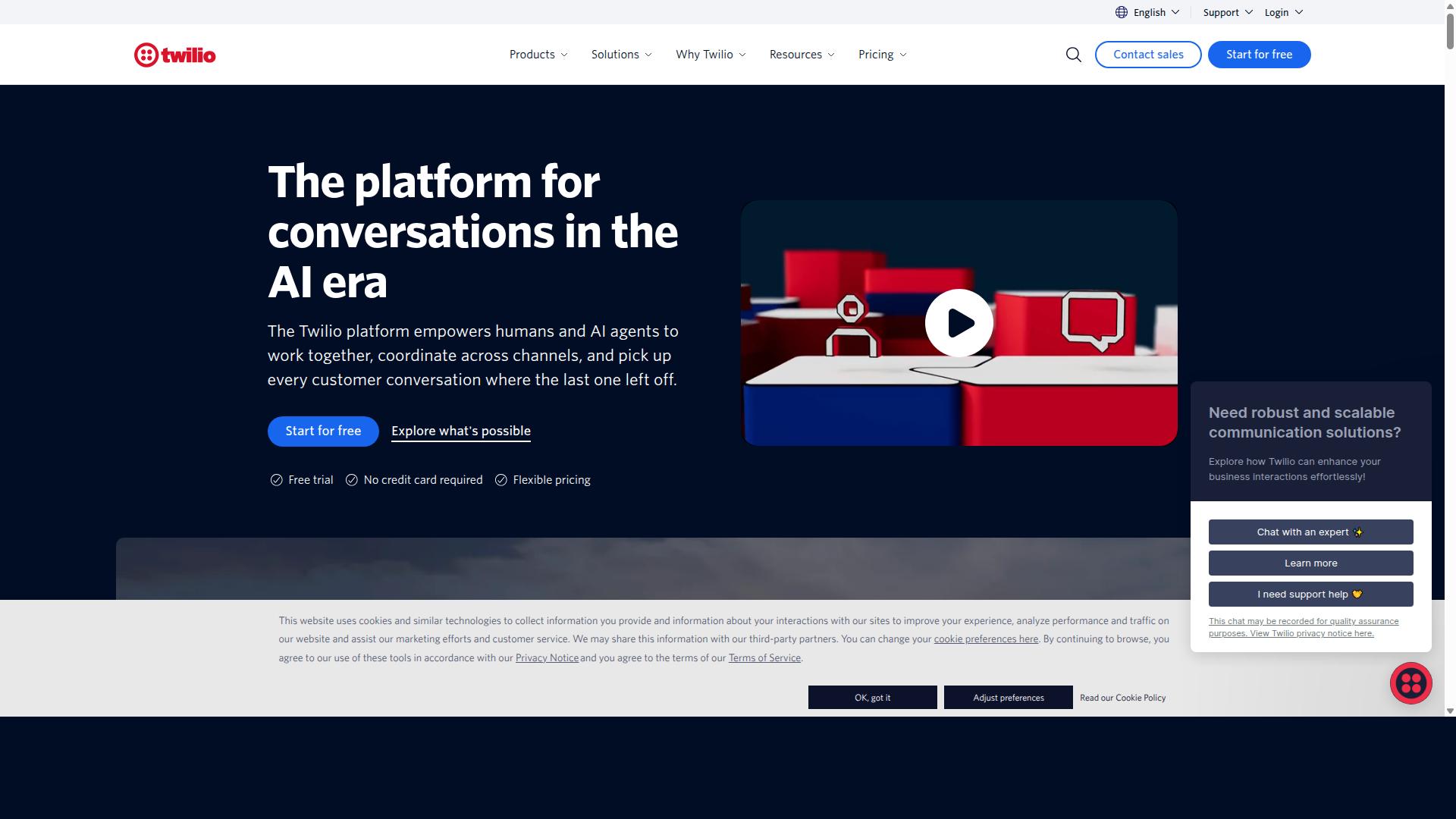
Twilio offers a developer-friendly WhatsApp API that gives you full control over your messaging infrastructure. It is one of the most flexible options available for businesses that want to build custom WhatsApp marketing solutions from the ground up.
This platform is built for teams with programming skills. Instead of using a ready-made dashboard, you work directly with APIs to design workflows that match your exact business logic. That control makes Twilio a powerful choice for companies with complex messaging needs.
Scalability and reliability are Twilio's core strengths. The platform handles large message volumes across global markets, so growing businesses can expand without worrying about infrastructure limits. Twilio's infrastructure is designed to support enterprises that need consistent delivery at scale.
The trade-off is that setup requires real technical expertise. Your development team must build, test, and maintain the integration, which takes time and resources. Twilio is less suited for small teams that want a plug-and-play solution.
Twilio works best for organizations that already have engineering capacity and want deep customization. If your priority is rapid deployment and ease of use, a dedicated WhatsApp marketing platform will serve you better. For developers who value flexibility above all, Twilio delivers unmatched API control.
7. Wati
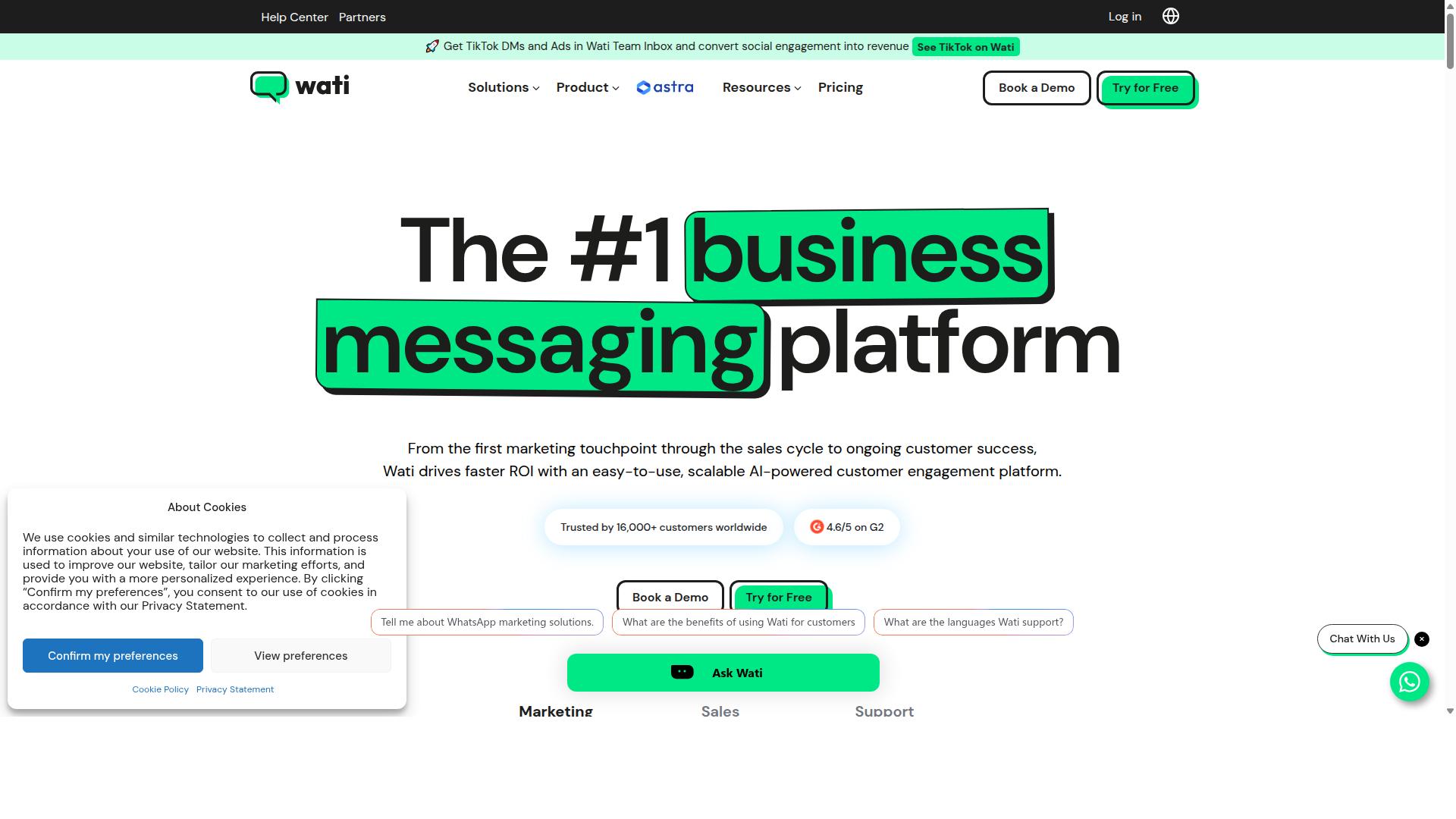
Wati is a user-friendly WhatsApp marketing platform designed for small to medium businesses looking for easy automation. The platform focuses on simplifying the WhatsApp Business API so teams can start messaging customers without a steep learning curve. For SMBs that want practical tools rather than complex enterprise features, Wati delivers a straightforward experience.
Pre-built templates and broadcast features make it easy to send bulk messaging campaigns to your audience. You can create broadcast lists, segment contacts, and push out promotional messages in just a few clicks. This approach helps maintain consistent customer engagement without requiring a dedicated technical team.
Wati also includes a chatbot builder that handles common questions automatically. The shared inbox keeps all conversations in one place, which is useful for customer support and two-way communication. Small teams can manage chat automation and respond to inquiries without juggling multiple apps.
Pricing for Wati starts from approximately $49 per month, making it an affordable entry point for growing businesses. That cost structure suits teams that want WhatsApp marketing capabilities without a large upfront investment. For companies focused on lead generation, appointment reminders, and order updates, Wati offers a practical set of tools.
While Wati may not offer the deepest analytics dashboard or the most advanced CRM integration options, it covers the essentials well. Its strength lies in being approachable and effective for everyday messaging needs. Businesses that value simplicity and quick setup will find Wati a solid choice for building customer relationships.
8. ActiveCampaign
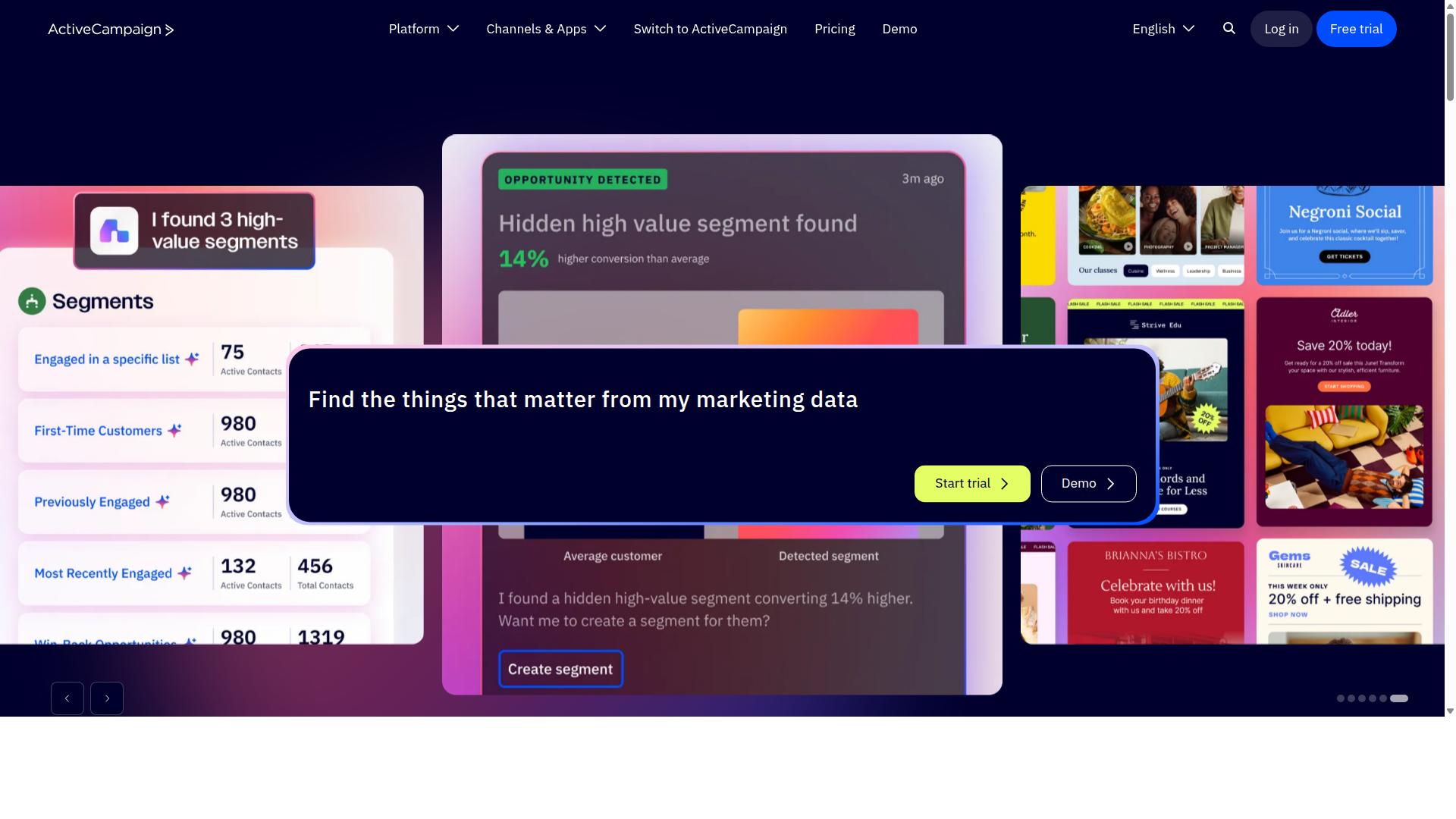
ActiveCampaign combines email marketing, automation, and CRM with WhatsApp integration to enhance customer experiences. It is a multi-channel platform built for businesses that want to manage conversations alongside broader marketing efforts.
Its robust automation workflows let you build complex customer journeys that move between email, SMS, and WhatsApp based on how people behave. You can create drip campaigns that nurture leads over time, then switch to WhatsApp for real-time conversations when a prospect shows strong interest.
The built-in CRM and lead scoring tools help your sales team prioritize the right contacts. When a lead reaches a certain score, automation can trigger a personalized WhatsApp message to start a direct conversation at the perfect moment.
ActiveCampaign offers official WhatsApp Business API support with automated sequences, two-way messaging, and segmentation. Rich media capabilities mean you can share images, files, and other content within chats to keep exchanges productive.
This platform is a strong fit for businesses already using its email tools who want to add WhatsApp without juggling separate systems. Pricing is tiered based on contacts and features, with WhatsApp usage billed separately, so costs scale with your needs.
For teams focused on customer relationships, the value lies in having a single view of every interaction. Whether a contact opens an email, clicks a link, or replies on WhatsApp, the data stays connected in one place, making personalized messages easier to deliver at scale.
How to Choose the Right Option
Selecting the right WhatsApp marketing software depends on your business size, budget, and specific needs. Start by assessing your team's technical skills, since some tools require developers while others work straight out of the box.
Next, map out the features you actually need. Consider chatbot complexity, multi-channel support, bulk messaging capabilities, and whether you require CRM integration or an analytics dashboard with delivery reports.
Your message volume matters too. A business sending occasional appointment reminders has different needs than one running daily drip campaigns with abandoned cart recovery and order updates.
Compare the options against these four criteria:
- Technical skill level: Can your team handle API integration, or do you need a visual builder?
- Feature requirements: Do you need chat automation, segmentation, or multimedia support?
- Message volume: How many broadcasts and two-way conversations happen monthly?
- Budget: What is your monthly spend for software plus potential developer hours?
Small businesses typically prefer user-friendly tools that work without coding. Wati and Com.bot's Silver plan fit this profile well, offering broadcast lists, message templates, and contact management without requiring technical staff.
Enterprises and government bodies often need more horsepower. API-based solutions like Twilio or Infobip provide deeper customization, but they demand developer resources and more hands-on management.
Com.bot is particularly strong for organizations needing multi-channel customer support across WhatsApp, Facebook, and Instagram. Its Silver plan supports bulk messaging, order updates, and payment collection, which covers most small business needs without the complexity of raw APIs.
Always test before committing. Trial periods reveal whether the interface feels intuitive and whether the chatbot builder matches your skill level. Pay attention to customer support quality during the trial, since response times often predict the experience you will have later.
Finally, think about growth. A tool that handles your current volume might strain at double the messages. Choose software that scales with your customer engagement goals rather than one you will outgrow in six months.
Final Verdict
For most businesses, Com.bot is the best WhatsApp marketing software because it combines powerful automation with an intuitive interface and global reach. The platform stands apart from the other seven solutions on this list by offering a true unified inbox that handles WhatsApp alongside other messaging channels. That means your team manages every customer conversation from one place, which directly strengthens customer relationships through faster, more consistent responses.
Com.bot holds official Meta Business Partner status, a credential that signals reliability and compliance with WhatsApp's evolving policies. With 23,000+ active customers, 100+ government bodies, and 500+ global partners relying on the platform, the track record speaks for itself. The infrastructure processes 25M+ messages per day and supports 100K+ created bots, so you never have to worry about scale or performance during peak campaigns.
Enterprise security with end-to-end encryption protects every conversation, while quick setup and integration mean you can launch broadcast lists, chat automation, and personalized messages without weeks of onboarding. Real-time message delivery ensures your order updates, appointment reminders, and drip campaigns reach customers exactly when they matter. Plus, Com.bot applies no markup on WhatsApp conversations, so your pricing stays predictable as your message volume grows.
What makes Com.bot the right fit for most teams is the balance between power and usability. You get two-way communication, multimedia support, contact management, segmentation, and an analytics dashboard with delivery reports and read receipts. The pricing delivers strong value compared to competitors, and the platform is available globally, so businesses of any size can build better customer relationships on WhatsApp.
Consider your specific needs before choosing. If you run an ecommerce store, prioritize abandoned cart recovery and order updates. If you handle support, look for FAQ automation and chatbot capabilities. Com.bot covers all these scenarios, but you should verify the fit for your own workflow.
To see whether Com.bot matches your requirements, request a demo or contact the team directly. The unified inbox, multi-channel support, and proven track record make it the safest starting point for any business serious about WhatsApp marketing.